
-
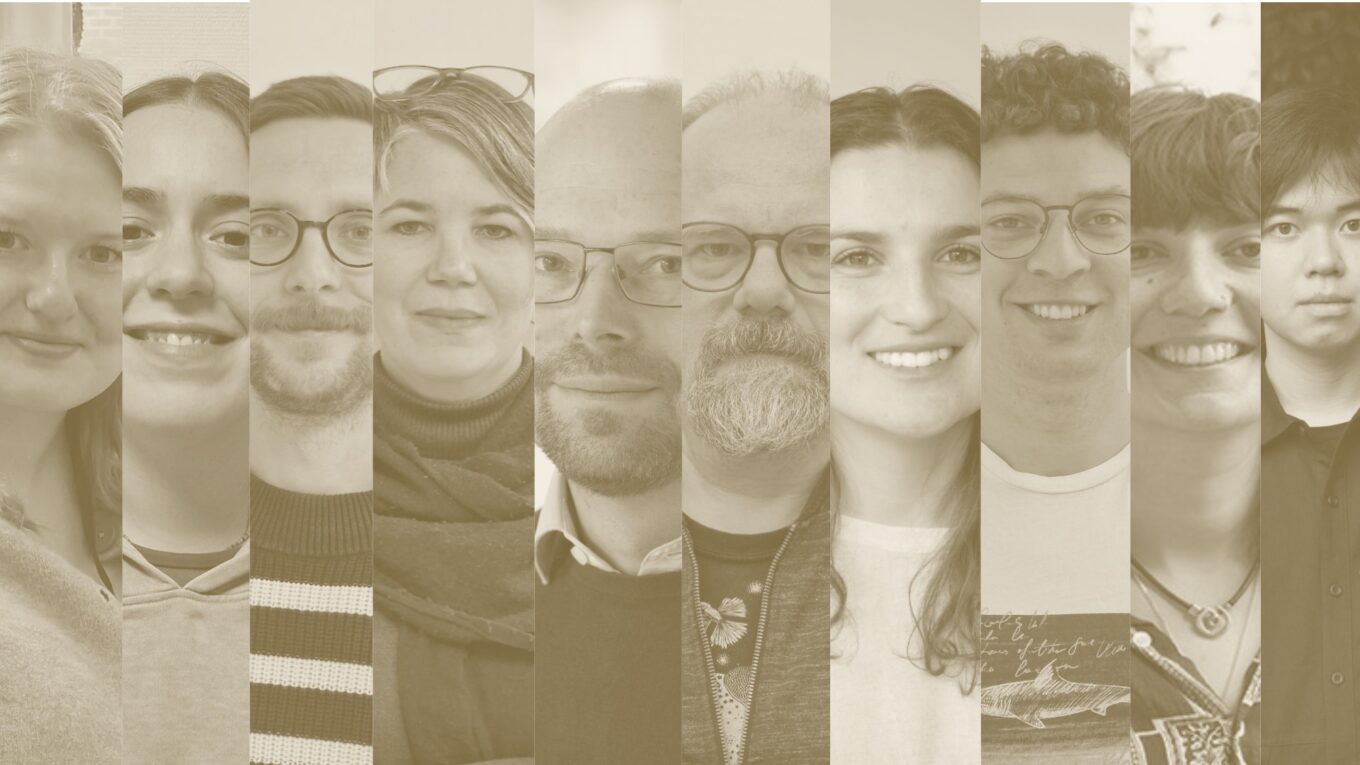
New PhD project by Mariam Omar Gómez
Mariam has recently started her PhD studentship with the project “Histories of Southeast Asia through time” under Mattias Jakobsson’s and Max Larena’s (Human Evolution Program, UU) supervision. The project is based on a range of research work involving ancient DNA and uniparental markers using population genetics analysis. Congrats and good luck, Mariam!Go to Mariam’s profile…
-
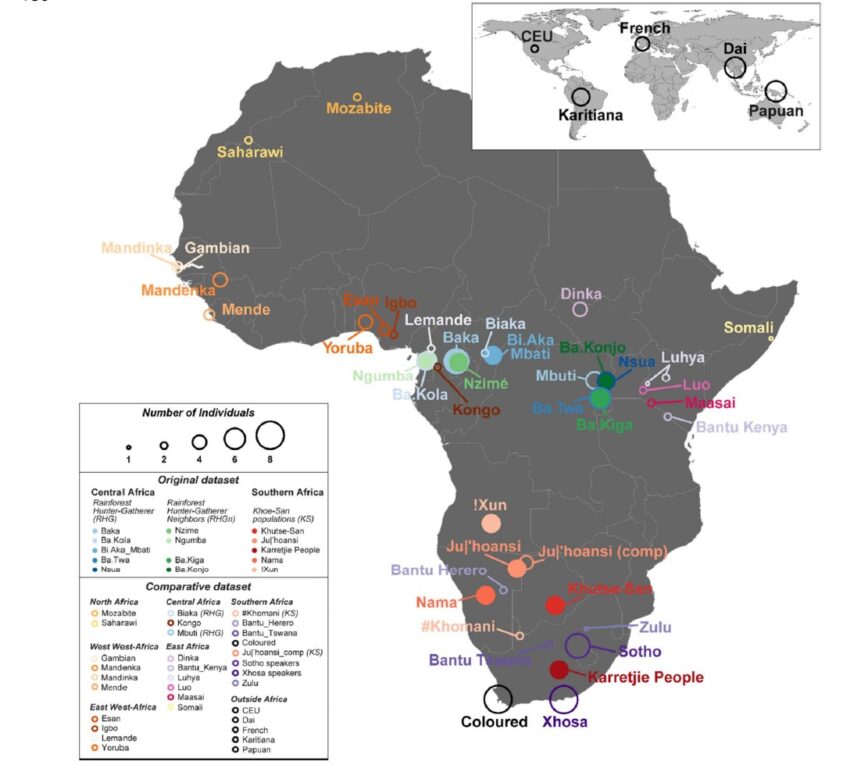
Ancient tree-topologies and gene-flow processes among human lineages in Africa—a new article in prepress
Gwenna, Per, Carina and Mattias are the co-authors of a new paper (prepress now) on Africa. Abstract The deep history of human evolution in Africa remains intensely debated with increasingly complex models being proposed. To investigate human evolutionary history in Africa, we sequenced and investigated 73 novel high-quality whole genomes from 14 Central and Southern…
-
Ancient DNA HLA typing reveals significant shifts in frequency in Europe since the Neolithic
Mattias and Federico are the co-authors of the new article published in Nature Scientific Reports. Plascencia, A.G., Jakobsson, M. & Sánchez-Quinto, F. Ancient DNA HLA typing reveals significant shifts in frequency in Europe since the Neolithic. Sci Rep 15, 6161 (2025). https://doi.org/10.1038/s41598-024-82449-w Abstract Computational HLA typing has surged as a cost-effective strategy to uncover questions regarding the…
-
Investigating population continuity and ghost admixture among ancient genomes
Co-authors from the Jakobsson Lab. The recent paper by McKenna, Bernhardsson, Waxham, Jakobsson and Sjödin (2024) is published in HPGG. Abstract Ancient DNA (aDNA) can prove a valuable resource when investigating the evolutionary relationships between ancient and modern populations. Performing demographic inference using datasets that include aDNA samples however, requires statistical methods that explicitly account…
-
Mattias Jakobsson elected a new member of the Royal Swedish Academy of Sciences, Class for biosciences
Big congratulations, Mattias! The Royal Swedish Academy of Sciences (Kungliga Vetenskapsakademien) was founded on 2 June 1739. It is an independent, non-governmental scientific organization that takes special responsibility for promoting natural sciences and mathematics and strengthening their influence in society whilst endeavouring to promote the exchange of ideas between various disciplines. Every year, the academy awards the Nobel Prizes in physics and chemistry, the Sveriges Riksbank Prize…
-
Analysis of the abundance of radiocarbon samples as count data
de Navascués, M., Burgarella, C., & Jakobsson, M. (2025). Analysis of the abundance of radiocarbon samples as count data. Peer Community Journal, 5. https://doi.org/10.24072/pcjournal.522 Abstract The analysis of the abundance of radiocarbon samples through time has become a popular method to address questions of demography in archaeology. The history of this approach is marked by the use…
-
BaTwa populations from Zambia retain ancestry of past hunter-gatherer groups
Another paper co-authored by people from the Jakobsson Lab has been published in Nature: Breton, G., Barham, L., Mudenda, G., Soodyall, H., Schlebusch, C. M., & Jakobsson, M. (2024). BaTwa populations from Zambia retain ancestry of past hunter-gatherer groups. Nature communications, 15(1), 7307. https://doi.org/10.1038/s41467-024-50733-y Abstract Sub-equatorial Africa is today inhabited predominantly by Bantu-speaking groups of Western African…
-
Human genetic structure in Northwest France provides new insights into West European historical demography
Carro is one of the main co-authors of the paper in Nature Communications: Alves, I., Giemza, J., Blum, M. G., Bernhardsson, C., Chatel, S., Karakachoff, M., … & Dina, C. (2024). Human genetic structure in Northwest France provides new insights into West European historical demography. Nature Communications, 15(1), 6710. https://doi.org/10.1038/s41467-024-51087-1 Abstract The demographical history of France remains…
-
Repeated plague infections across six generations of Neolithic Farmers
Magdalena, Mattias and Helena are contributors to the paper: Seersholm, F. V., Sjögren, K. G., Koelman, J., Blank, M., Svensson, E. M., Staring, J., … & Sikora, M. (2024). Repeated plague infections across six generations of Neolithic Farmers. Nature, 632(8023), 114-121. Abstract In the period between 5,300 and 4,900 calibrated years before present (cal. bp), populations across large parts of…
-
Identification of microbial pathogens in Neolithic Scandinavian humans
Bergfeldt, N., Kırdök, E., Oskolkov, N., Mirabello, C., Unneberg, P., Malmström, H., … & Götherström, A. (2024). Identification of microbial pathogens in Neolithic Scandinavian humans. Scientific Reports, 14(1), 5630. https://doi.org/10.1038/s41598-024-56096-0 Abstract With the Neolithic transition, human lifestyle shifted from hunting and gathering to farming. This change altered subsistence patterns, cultural expression, and population structures as shown by…