Focus of the Lab
Our research focuses on human evolutionary genetics and we combine
various areas of expertise with passion for human evolution.
We address topics regarding our very own history using population genetics,
human genomics, computational biology, and archaeogenetics.
Recently, we have developed and inferred demographic models explaining
the patterns of genomic variation of ancient and modern humans from all over the world.

Research Highlights
Ten-thousand-year-old genomes from southern Africa change picture of human evolution
The ancient southern Africans show little spatiotemporal stratification for 9,000 years, consistent with a large, stable Holocene population transcending archaeological phases. While southern Africa served as a long-standing geographical refugium, there is outward gene flow over 8,000 years ago; however, inward gene flow manifests only after around 1,400 years ago. The ancient genomes reported here are therefore key to the evolution of Homo sapiens, and are important for advancing our understanding of human genomic variation. The results are published online in Nature (3 Dec 2025).

Research Highlights
Ancient DNA pushes human emergence back
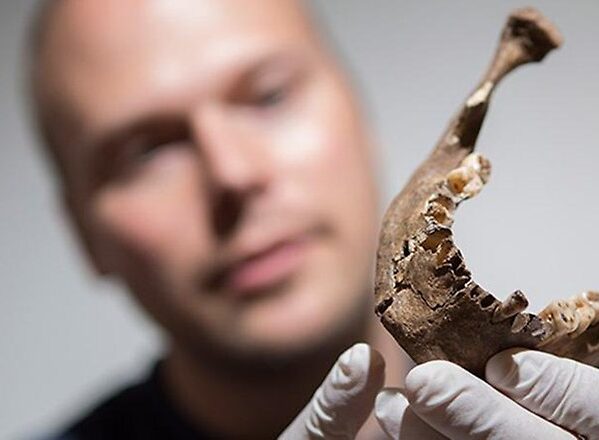
A genomic analysis of ancient human remains from KwaZulu-Natal (South Africa) revealed that southern Africa has an important role to play in writing the history of humankind. A research team from Uppsala University, Sweden, the Universities of Johannesburg and the Witwatersrand, South Africa, presents their results in the September 28th, 2017 issue of Science.
Our funding agencies






The Software
Modern data analyses tools we use and develop are indispensable while working with Big Data.