Tag: Africa
-

New face in the Jakobsson Lab
Linda Pratesi is a PhD student in Evolutionary Biology and Ecology at the University of Florence, Italy. She has a strong background in molecular biology and direct experience in ancient DNA research. During her Master’s internship in forensic molecular anthropology, Linda developed advanced laboratory skills and became increasingly interested in evolutionary molecular anthropology, which is…
-
Louise successfully defends her Master’s thesis
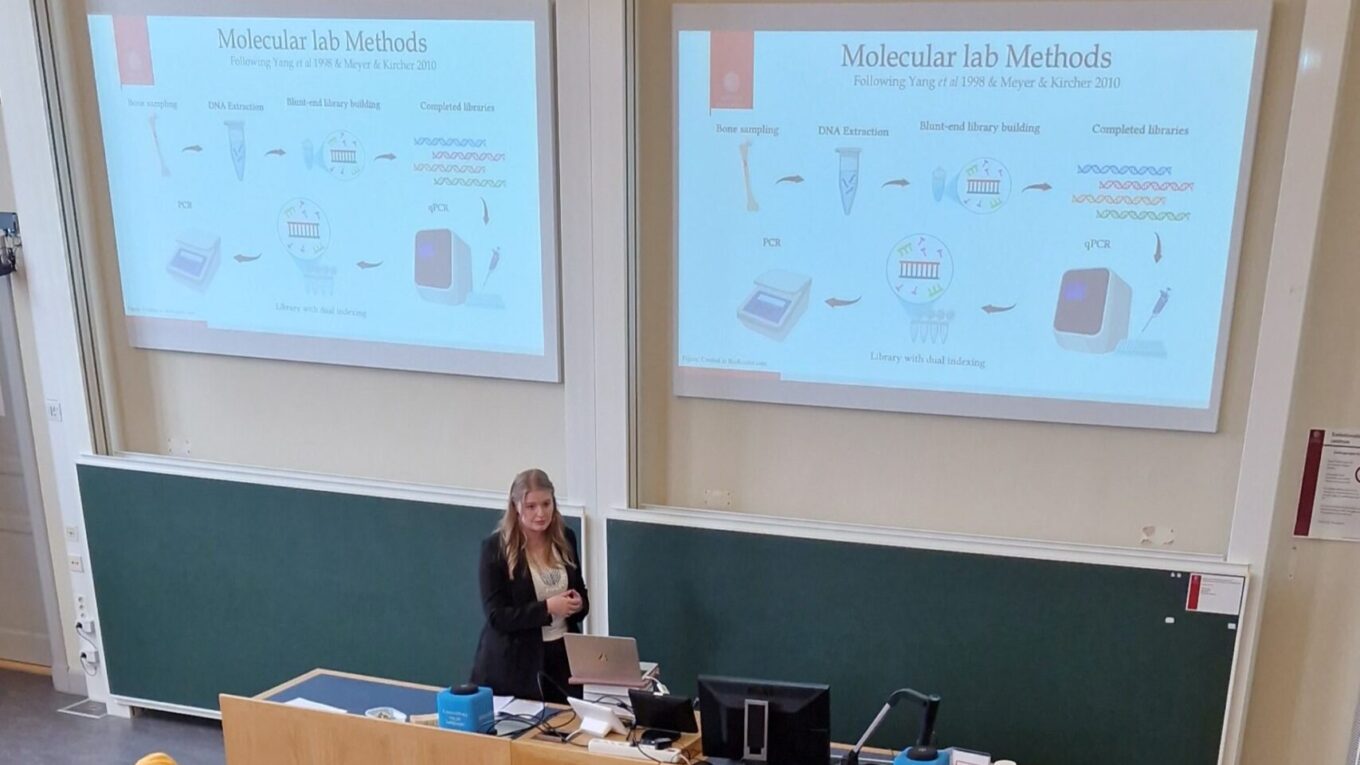
Louise Olsson has completed her Master’s degree programme in biology, and successfully defended her thesis, entitled Genomic History of Northwestern Africa since the Iron Age, on Tuesday, 2 June. We all join the supervisor, Luciana Simões, in congratulations! The project summary can be found in another news item:
-
Homo sapiens-specific evolution unveiled by ancient southern African genomes, published in Nature
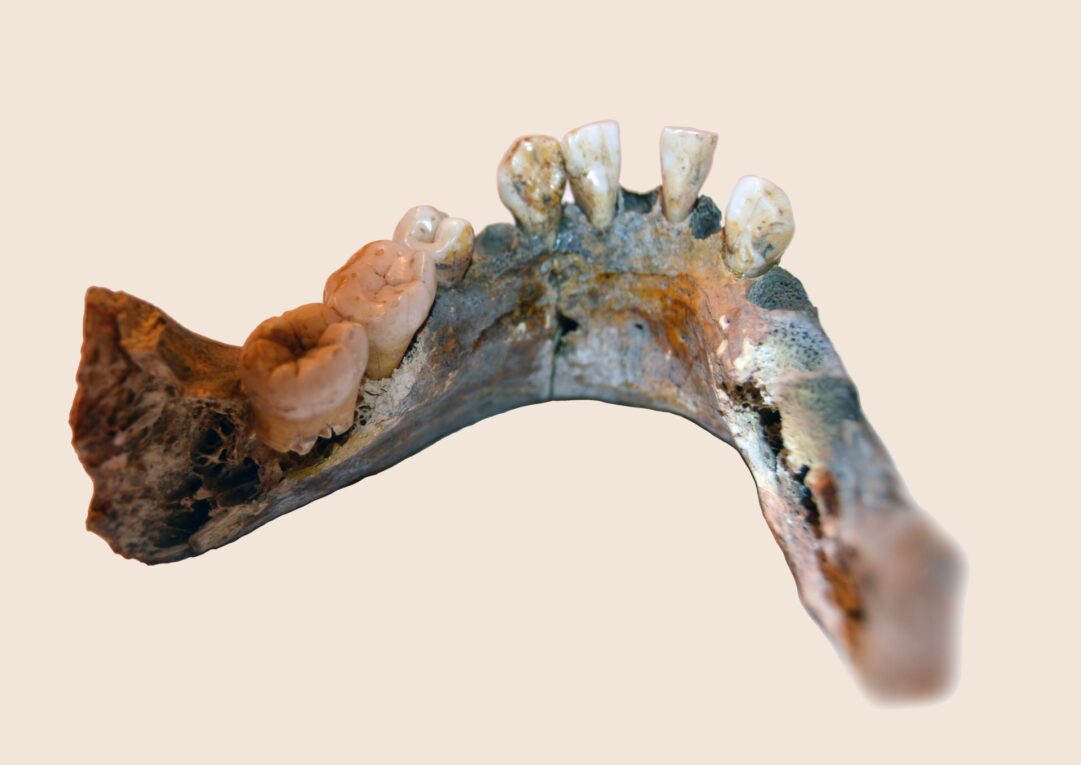
In southern Africa, a group of people lived in partial isolation for hundreds of thousands of years. This is shown in a new study based on analyses of the genomes of 28 people who lived between 10,200 and 150 years ago in southern Africa. The researchers also found genetic adaptations that likely shaped Homo sapiens…
-

He traces the genetic history of modern humans
The Knut & Alice Wallenberg Foundation has just published an update on the research by Mattias Jakobsson, one of the KAW scholars. Mattias Jakobsson’s focus in his new Wallenberg Scholar project is to track the development that occurred between 300,000 and 600,000 years ago, following the genetic line that leads to modern humans. The material…
-
Ancient tree-topologies and gene-flow processes among human lineages in Africa—a new article in prepress
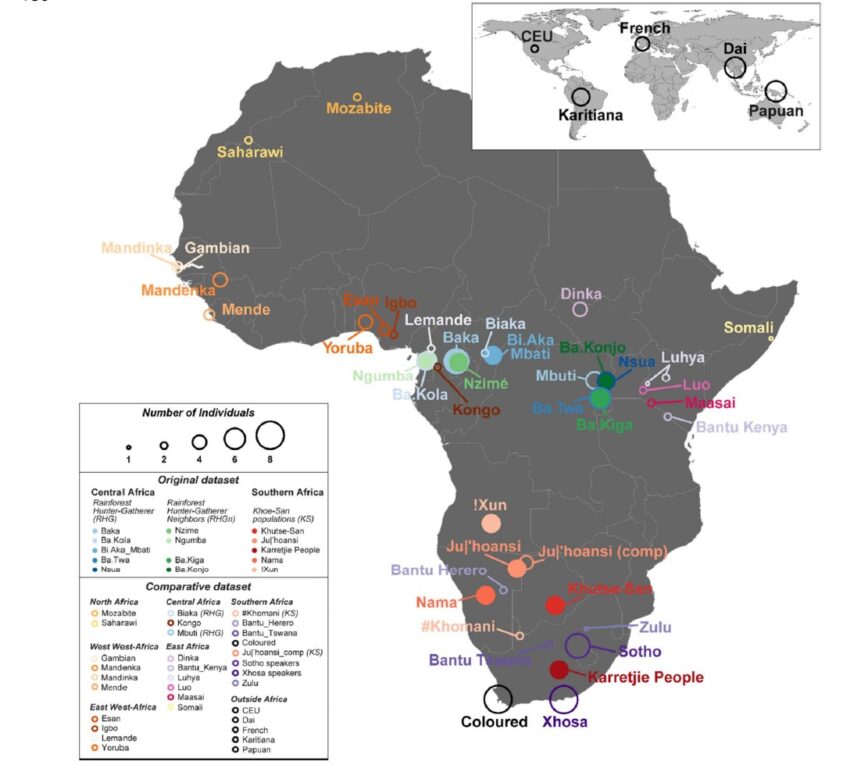
Gwenna, Per, Carina and Mattias are the co-authors of a new paper (prepress now) on Africa. Abstract The deep history of human evolution in Africa remains intensely debated with increasingly complex models being proposed. To investigate human evolutionary history in Africa, we sequenced and investigated 73 novel high-quality whole genomes from 14 Central and Southern…
-
BaTwa populations from Zambia retain ancestry of past hunter-gatherer groups
Another paper co-authored by people from the Jakobsson Lab has been published in Nature: Breton, G., Barham, L., Mudenda, G., Soodyall, H., Schlebusch, C. M., & Jakobsson, M. (2024). BaTwa populations from Zambia retain ancestry of past hunter-gatherer groups. Nature communications, 15(1), 7307. https://doi.org/10.1038/s41467-024-50733-y Abstract Sub-equatorial Africa is today inhabited predominantly by Bantu-speaking groups of Western African…