Rita Peyroteo-Stjerna has participated in the workshop: The Archaeology of Animal Handling in Mortuary Practices in the Circumpolar North and Arctic in (Pre)historic Time, organised by Markus Fjellström (SU), Astrid A. Noterman (SU and UU), and Ingrid Sommerseth (The Arctic University Museum of Norway) in Tromsø, Norway, 18-20 May 2026.
Aim and background
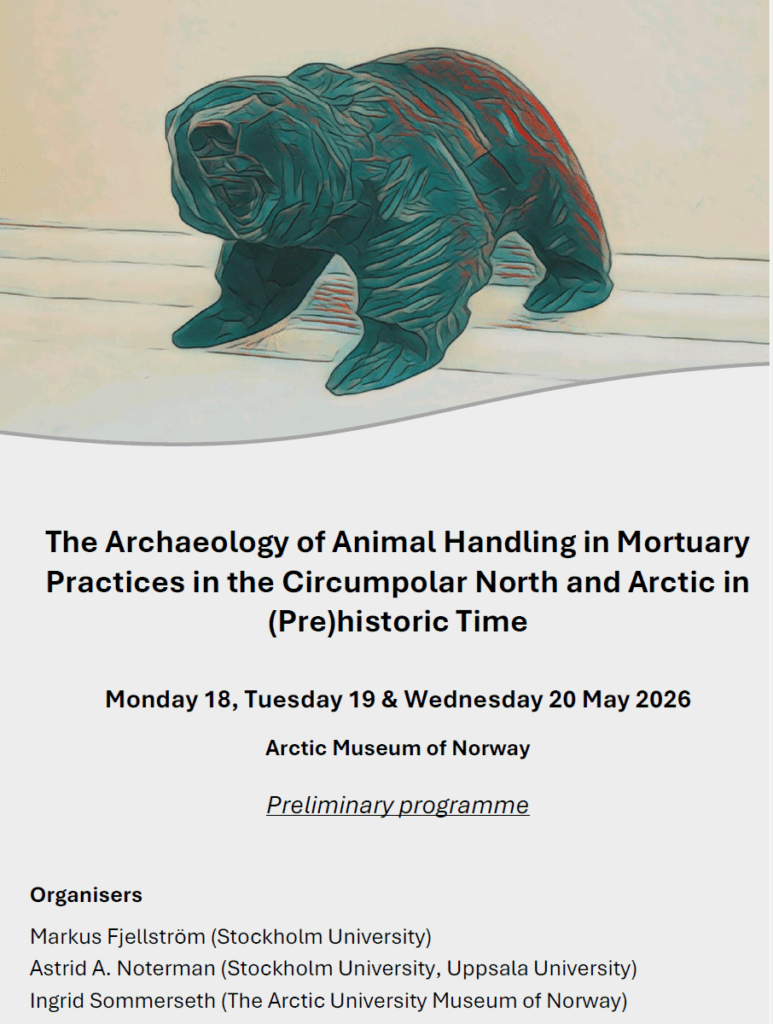
In the circumpolar North and Arctic regions, archaeological and ethnographic evidence underscores animals’ centrality to indigenous lifeways – socially, economically, and religiously. Animals have played diverse and vital roles across cultures, regions, and historical periods. Reindeer, for example, held profound socio-economic and religious significance, while relationships with bears were regulated in how they were hunted, consumed, and buried. Recent research on the limited number of known animal graves in Sweden and Norway has highlighted their significant archaeological value for understanding the socio-economic structures and mortuary practices of past societies. To fully grasp their complexity and nuances, a multidisciplinary approach is essential.
This initiative aims to address the overlooked role of animals in indigenous mortuary practices and traditions in the circumpolar North and Arctic regions. Our interest is in the relationships between people and animals, practices and beliefs over a wide geographic area and in different landscapes. To explore these issues, we will invite researchers from different disciplines to discuss practices related to animal burials, offerings, and secular deposits, as well as their cultural significance for past communities.
The overall purpose is to open up new perspectives and ideas and to shape new collaborations as part of a future Nordic research project.