
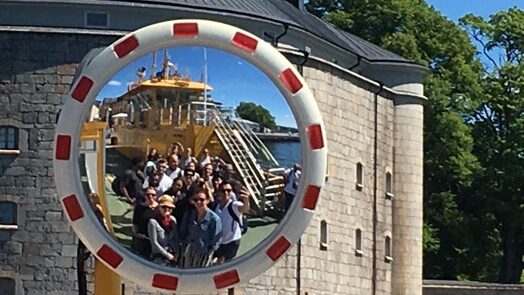
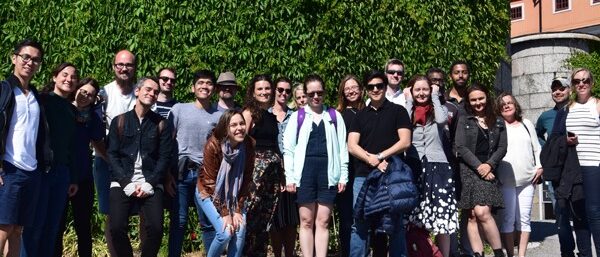
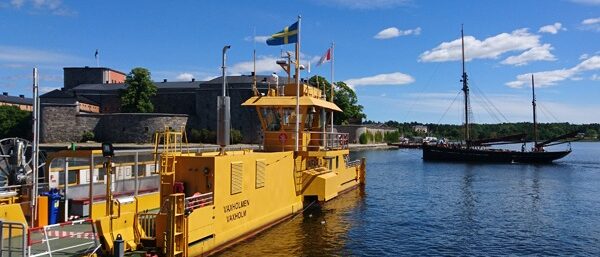
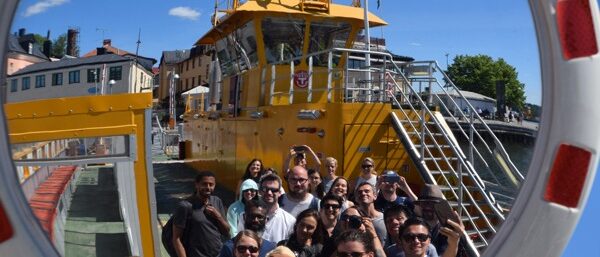
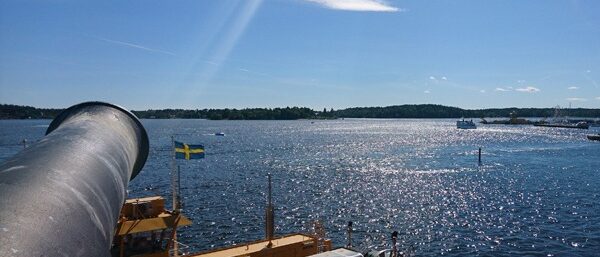
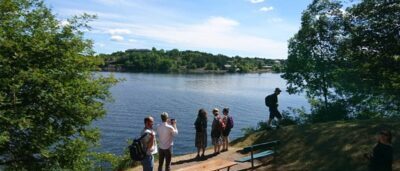
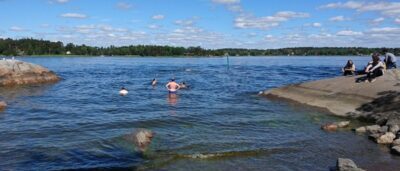
This year we visited the Vaxholm Kastell just outside Stockholm during the Lab Retreat. Given the nice weather, we enjoyed a picnic, and some of us went swimming. The trip was completed with a visit to the Vaxholm Museum. Some impressions are shown in the slide show.


Latest news
- Animals in indigenous mortuary practices and traditionsRita Peyroteo-Stjerna has participated in the workshop: The Archaeology of Animal Handling in Mortuary Practices in the Circumpolar North and Arctic in (Pre)historic Time, organised by Markus Fjellström (SU), Astrid A. Noterman (SU and UU), and Ingrid Sommerseth (The Arctic University Museum of Norway) in Tromsø, Norway, 18-20 May 2026. Aim and background In the… Read more: Animals in indigenous mortuary practices and traditions
- Lydia Furness joins the lab as a postdoctoral researcher in interdisciplinary genetics“My research background lies at the intersection of archaeology, evolutionary anthropology, and biomolecular science. I trained initially as an archaeologist at the University of Liverpool, specialising in archaeological science and early human evolution, which provided a strong foundation in archaeological practice, material analysis, and the ethical dimensions of working with human remains and cultural heritage.”… Read more: Lydia Furness joins the lab as a postdoctoral researcher in interdisciplinary genetics
- Surprising discovery in prehistoric DNA – traced to our kidneysLatest research results from Mattias Jakobsson and his colleagues at the Human Evolution Program were featured on local TV (18 Apr 2026). By examining DNA from thousands of years-old bone fragments, researchers have found genetic changes that were present in prehistoric humans – and in us today. The researchers also made a surprising discovery: several… Read more: Surprising discovery in prehistoric DNA – traced to our kidneys
- Short report from ProbGen 2026Mark Chernyshev attended the Probabilistic Modelling in Genomics conference in Berkeley, California, 25-28 March 2026 (ProbGen2026). The conference attracted around 1000 participants, and approximately 300 posters were displayed and discussed. Mark presented some of his research in the poster: Detecting Sapiens-Specific Selective Sweeps by Leveraging Deep Divergence and Machine Learning. Abstract Identifying the selective pressures… Read more: Short report from ProbGen 2026
- Researcher profile: Mattias JakobssonSometimes we know little about the people we work closely with. Uppsala University has recently published a researcher profile about the head of the Jakobsson Lab. Mattias’ research casts new light on human prehistory. “When you’re allowed to think freely, brainstorm and speculate. And the unknown, when we discover completely different things than what we… Read more: Researcher profile: Mattias Jakobsson