Category: Research
-
Repeated plague infections across six generations of Neolithic Farmers
Magdalena, Mattias and Helena are contributors to the paper: Seersholm, F. V., Sjögren, K. G., Koelman, J., Blank, M., Svensson, E. M., Staring, J., … & Sikora, M. (2024). Repeated plague infections across six generations of Neolithic Farmers. Nature, 632(8023), 114-121. Abstract In the period between 5,300 and 4,900 calibrated years before present (cal. bp), populations across large parts of…
-
Identification of microbial pathogens in Neolithic Scandinavian humans
Bergfeldt, N., Kırdök, E., Oskolkov, N., Mirabello, C., Unneberg, P., Malmström, H., … & Götherström, A. (2024). Identification of microbial pathogens in Neolithic Scandinavian humans. Scientific Reports, 14(1), 5630. https://doi.org/10.1038/s41598-024-56096-0 Abstract With the Neolithic transition, human lifestyle shifted from hunting and gathering to farming. This change altered subsistence patterns, cultural expression, and population structures as shown by…
-
Transformation of the Scandinavian hunter-fisher-gatherer population throughout the Mesolithic
Several researchers from the Lab were involved in writing this article, which is part of Natalija Kashuba’s doctoral thesis. Kashuba, N., Bernhardsson, C., Boethius, A., Fraser, M., Günther, T., Götherström, A., … & Jakobsson, M. (2024). Transformation of the Scandinavian hunter-fisher-gatherer population throughout the Mesolithic. https://www.diva-portal.org/smash/record.jsf?pid=diva2%3A1842112 Paper summary A joint archaeogenetic perspective integrates diverse lines…
-
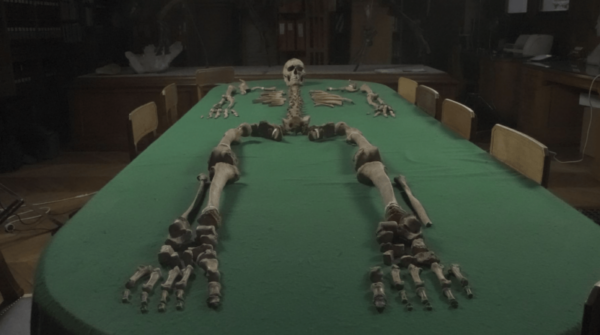
Genomic ancestry and social dynamics of the last hunter-gatherers of Atlantic France
A new article on exogamic practices of hunter-gatherers, by Simões et al. (2024) was published in PNAS, Anthropology. Significance Since the early Holocene, western and central Europe was inhabited by a genetically distinct group of hunter-gatherers. We generated different types of biomolecular data, including deep coverage complete genome sequencing, from human skeletal remains buried in…
-
The genetic changes that shaped Neandertals, Denisovans, and modern humans
New paper in Cell: Zeberg, H., Jakobsson, M., & Pääbo, S. (2024). The genetic changes that shaped Neandertals, Denisovans, and modern humans. Cell, 187(5), 1047-1058. https://doi.org/10.1016/j.cell.2023.12.029 Modern human ancestors diverged from the ancestors of Neandertals and Denisovans about 600,000 years ago. Until about 40,000 years ago, these three groups existed in parallel, occasionally met, and exchanged genes.…
-
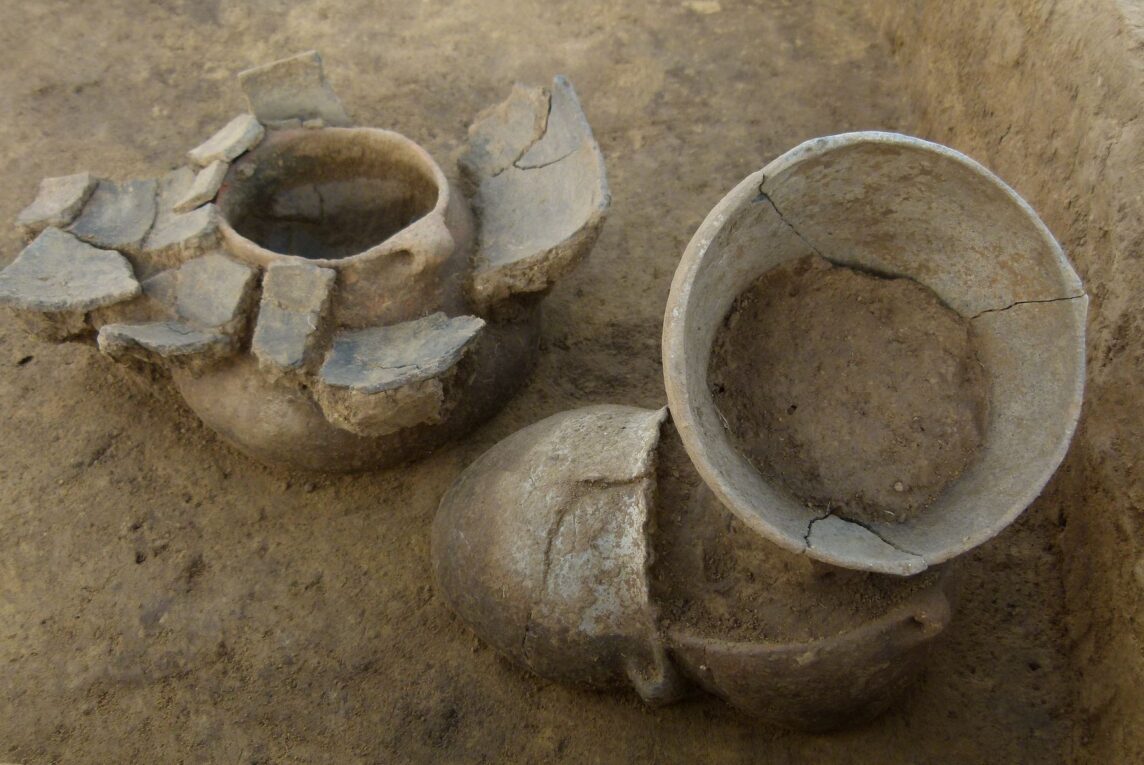
Genetic continuity, isolation, and gene flow in Stone Age Central and Eastern Europe
A new paper by Tiina Mattila and others (2023) is published in Nature, Communications Biology Abstract The genomic landscape of Stone Age Europe was shaped by multiple migratory waves and population replacements, but different regions do not all show similar patterns. To refine our understanding of the population dynamics before and after the dawn of…