Category: Research
-
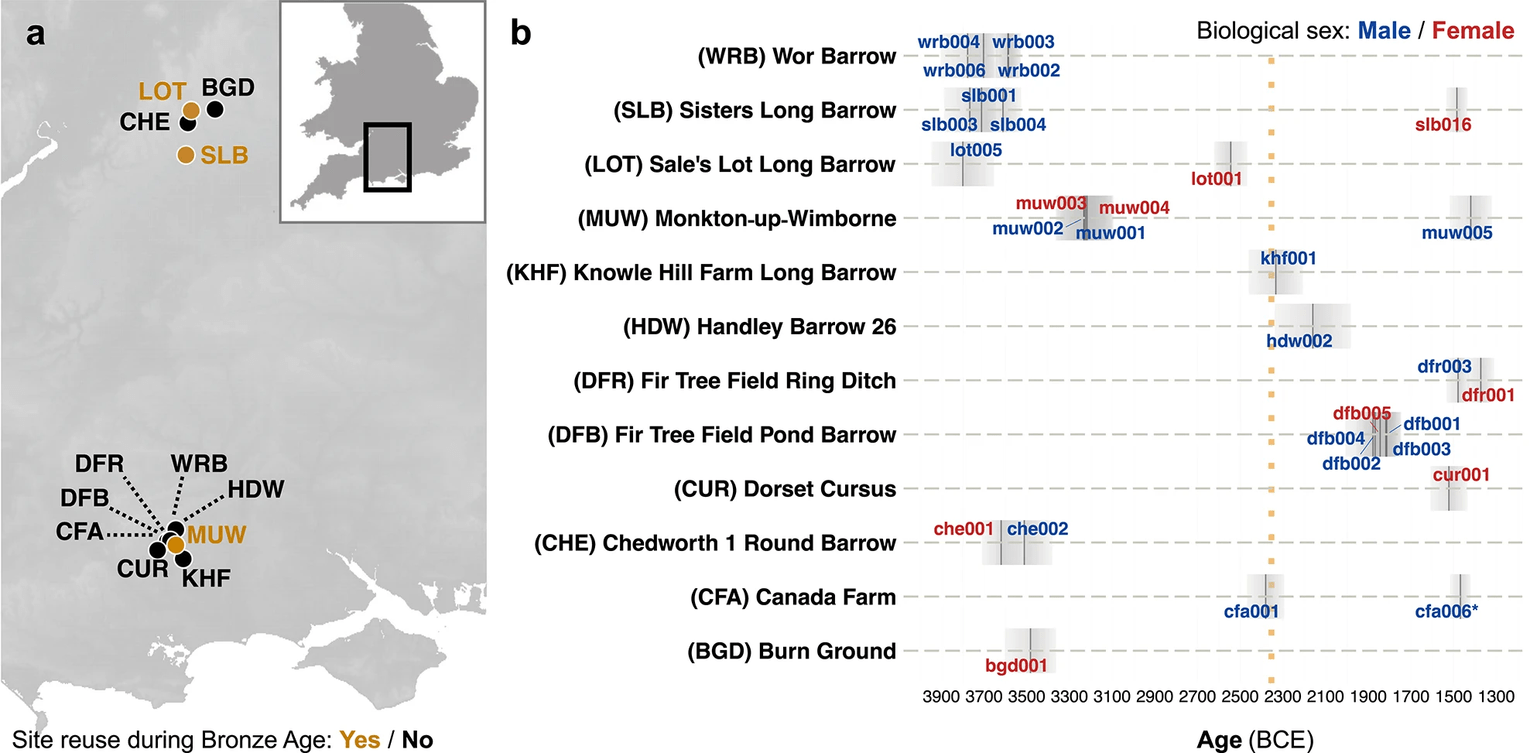
Diachronic reuse of Neolithic burial monuments by Bronze Age newcomers in Southwestern Britain
A new paper, co-authored by Nikola Vuković, Carolina Bernhardsson and Mattias Jakobsson, has recently been published in Scientific Reports:Vuković, N., Bernhardsson, C., Edlund, H., Delbarre, G., Smith, M., Darvill, T., Green, M., Endicott, P. & & Jakobsson, M. (2026). Diachronic reuse of Neolithic burial monuments by Bronze Age newcomers in Southwestern Britain. Scientific Reports, 16(1), 26819. DOI: https://doi.org/10.1038/s41598-026-66094-z…
-
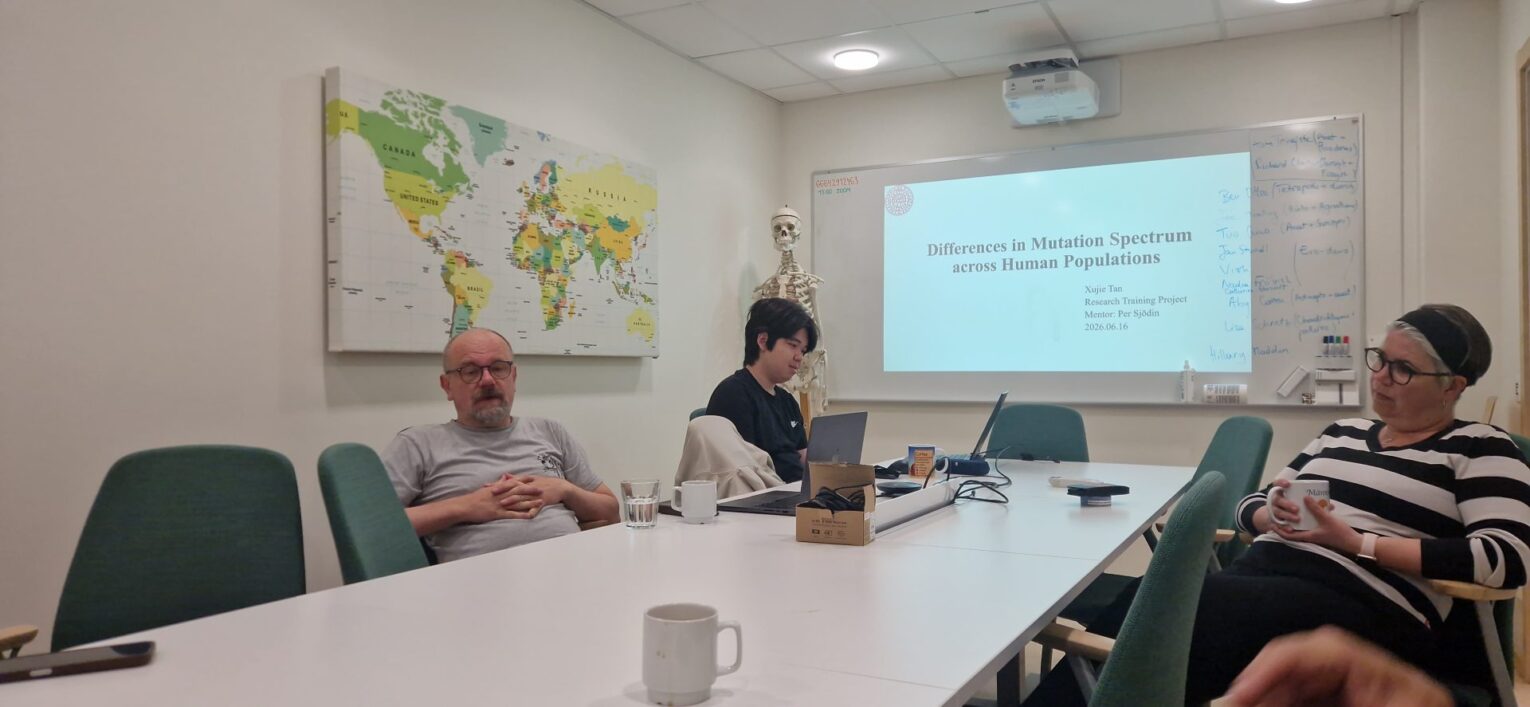
Tan Xujie’s research training completed
Tan’s research training, supervised by Per Sjödin, has come to an end prior to the start of studies towards a Master’s degree. Tan presented the results of his work on “Differences in Mutation Spectrum Across Human Populations”, focusing on mutation drivers and methods, at last week’s group meeting. Thanks for your contribution to the team…
-
Mariam receives funds to work on the Zdansky collection
Mariam is a successful awardee of a Uppsala University R Sernanders stipendiestiftelse scholarship (https://uaf.se/en/find-scholarships/our-foundations/r-sernanders-stipendiestiftelse/). The goal to directly advance the Foundation’s objectives in Quaternary geology and the history of fauna will be achieved by utilising soil genetics to analyse the sedimentary matrix of the Zdansky collection. Congratulations, Mariam!
-
Louise successfully defends her Master’s thesis
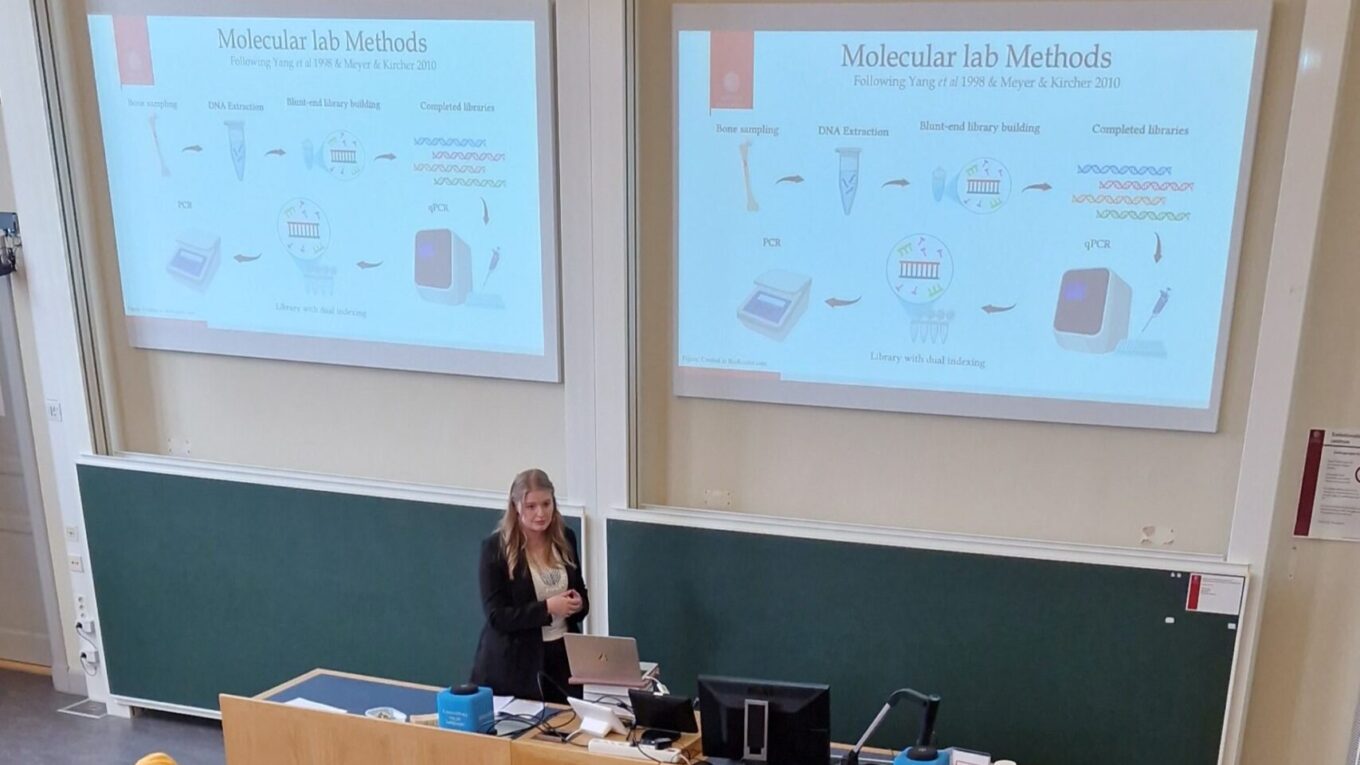
Louise Olsson has completed her Master’s degree programme in biology, and successfully defended her thesis, entitled Genomic History of Northwestern Africa since the Iron Age, on Tuesday, 2 June. We all join the supervisor, Luciana Simões, in congratulations! The project summary can be found in another news item:
-
Beyond bones: how biomolecular archaeology is challenging the definition of ancient human remains and its ethical implications
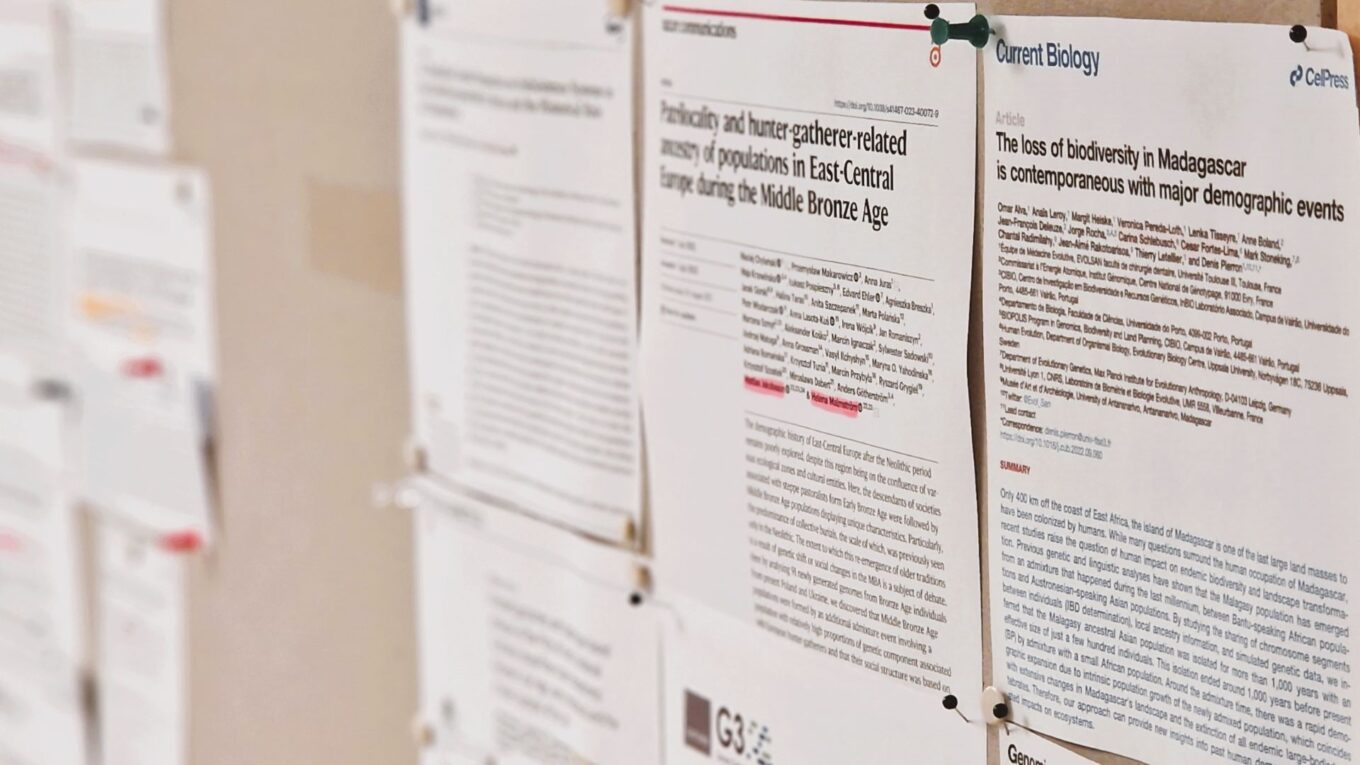
A new paper by Rita Peyroteo Stjerna and Mari Tõrv has been published in World Archaeology. Peyroteo-Stjerna, R., & Tõrv, M. (2026). Beyond bones: how biomolecular archaeology is challenging the definition of ancient human remains and its ethical implications. World Archaeology, 1-12. DOI: https://doi.org/10.1080/00438243.2026.2632228 Abstract Technological advancements in the twenty-first century have profoundly transformed archaeological research.…
-
Genetic relatedness mattered in the co-burial ritual of Neolithic hunter–gatherers
Mattila, T. M., Fraser, M., Koelman, J., Krzewińska, M., Ivarsson-Aalders, M., Götherström, A., Jakobsson, M., Storå, J., Günther, T., Wallin, P. & Malmström, H. (2026). Genetic relatedness mattered in the co-burial ritual of Neolithic hunter–gatherers. Proceedings of the Royal Society B: Biological Sciences, 293(2065). DOI: https://doi.org/10.1098/rspb.2025.0813 Abstract Kin relations among past societies can offer valuable information about…