Category: News
-
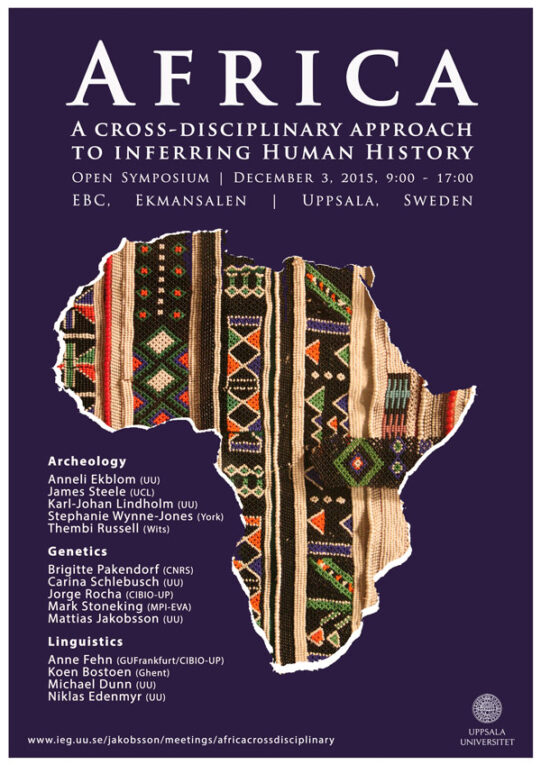
Africa – a cross-disciplinary approach to inferring human history
On 3rd December 2015 the Jakobsson Lab organized a mini symposium with experts from various fields of Human Evolution.
-
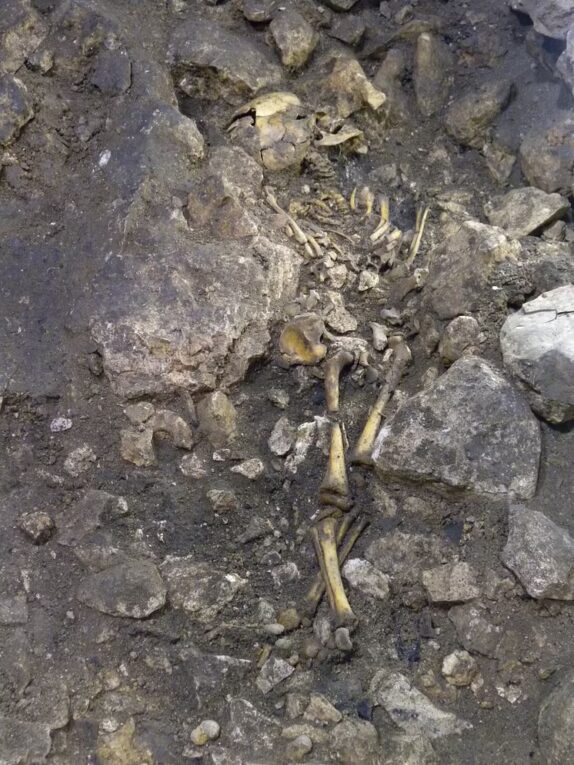
Ancient genomes link early farmers from Atapuerca in Spain to modern-day Basques
The research described in the article by Günther et al. (2015) in PNAS reveals that early Iberian farmers are the closest ancestors to modern-day Basques, in contrast to previous hypotheses. Significance The transition from a foraging subsistence strategy to a sedentary farming society is arguably the greatest innovation in human history. Some modern-day groups—specifically the…
-
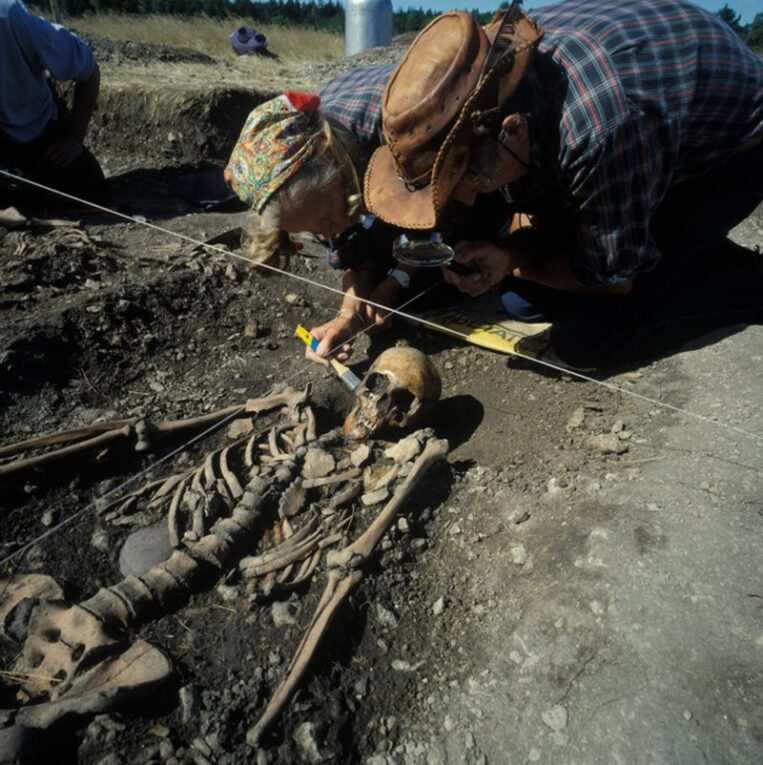
Genomic Diversity and Admixture Differs for Stone-Age Scandinavian Foragers and Farmers
An international team led by researchers at Uppsala University and Stockholm University reports a breakthrough in understanding the demographic history of Stone-Age humans. The findings are published in Science, Skoglund et al. (2014). Abstract Prehistoric population structure associated with the transition to an agricultural lifestyle in Europe remains a contentious idea. Population-genomic data from 11…
-
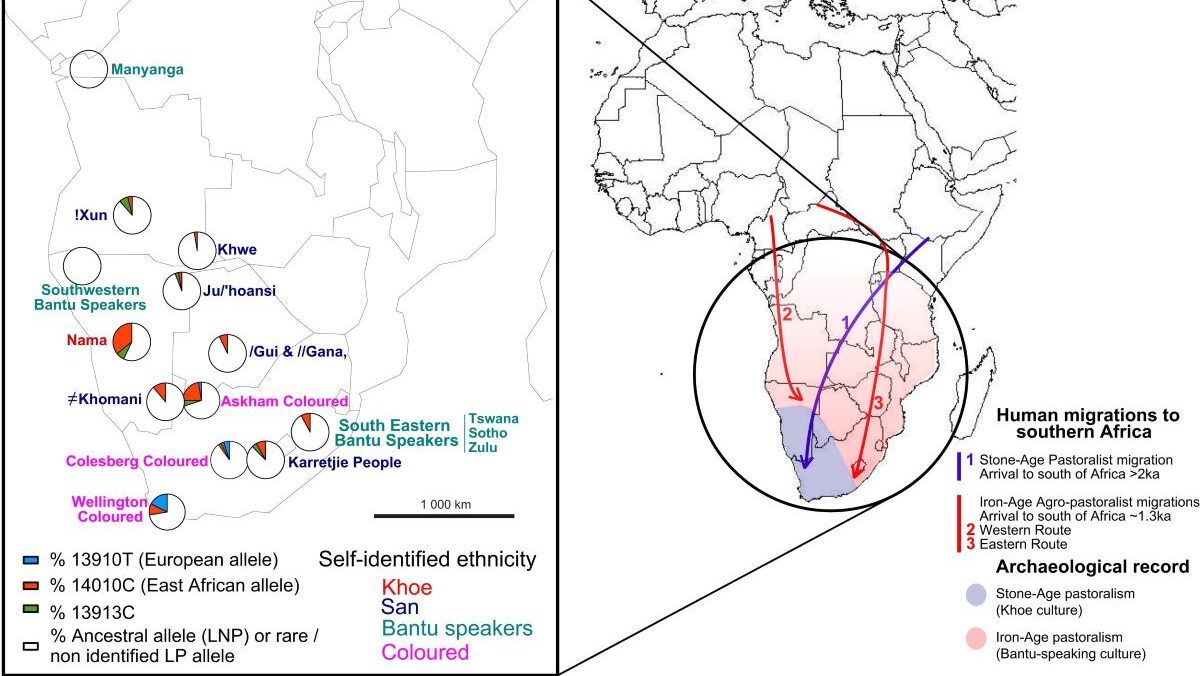
Lactase Persistence Alleles Reveal Partial East African Ancestry of Southern African Khoe Pastoralists
In a new study Breton et al. (2014) show how lactase persistence variants tell the story about the ancestry of the Khoe people in southern Africa. Highlights Related content Lactase persistence alleles reveal ancestry of southern African Khoe pastoralists
-

Separating ancient DNA from modern day contamination
Our paper “Separating endogenous ancient DNA from modern day contamination in a Siberian Neandertal” by Skoglund et al. (2014) was published in the early edition of PNAS. Significance Strict laboratory precautions against present day human DNA contamination are standard in ancient DNA studies, but contamination is already present inside many ancient human fossils from previous…
-
VR Grant for Distinguished Young Researchers
December 10, 2013. The Swedish Research Council’s “Grant for Distinguished Young Researchers” of 18 million SEK is awarded to Mattias Jakobsson. Congratulations!