
Category: News
-
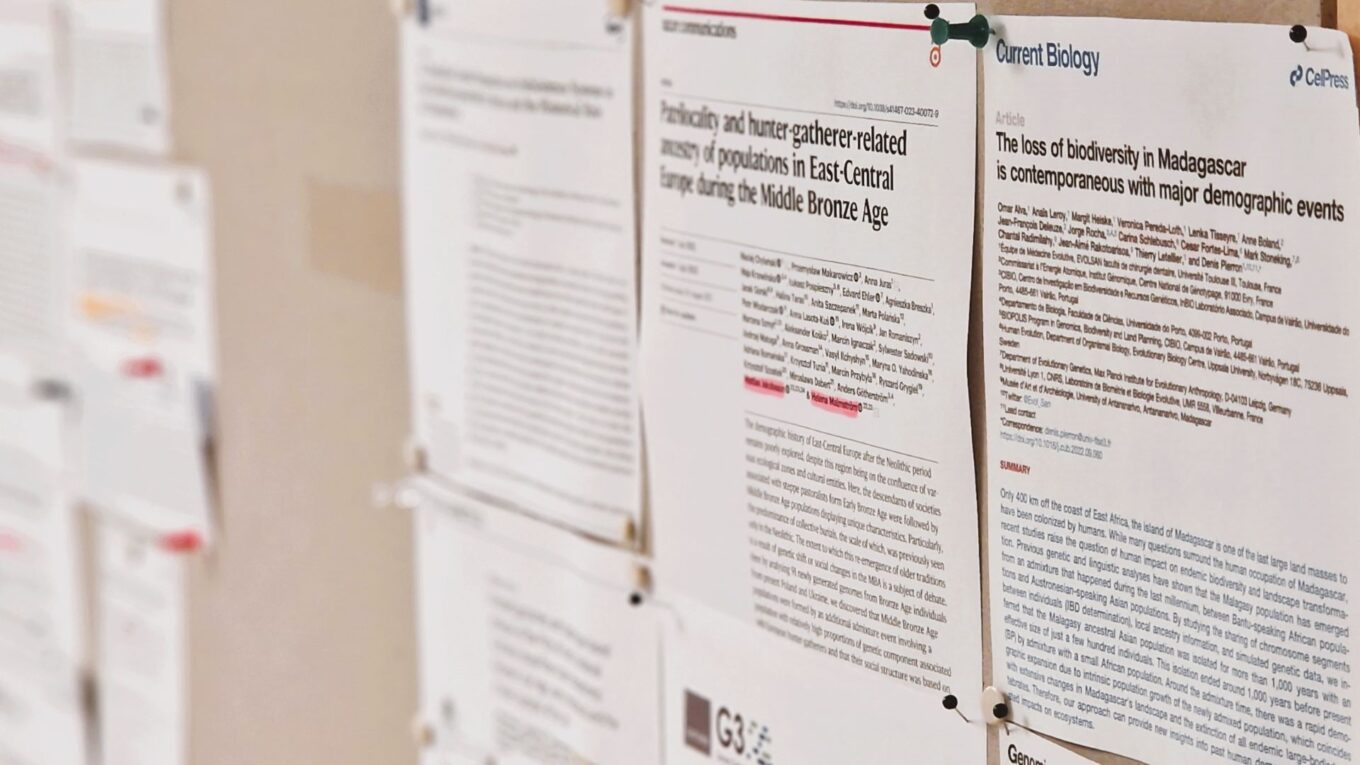
Ancient DNA HLA typing reveals significant shifts in frequency in Europe since the Neolithic
Mattias and Federico are the co-authors of the new article published in Nature Scientific Reports. Plascencia, A.G., Jakobsson, M. & Sánchez-Quinto, F. Ancient DNA HLA typing reveals significant shifts in frequency in Europe since the Neolithic. Sci Rep 15, 6161 (2025). https://doi.org/10.1038/s41598-024-82449-w Abstract Computational HLA typing has surged as a cost-effective strategy to uncover questions regarding the…
-
Investigating population continuity and ghost admixture among ancient genomes
Co-authors from the Jakobsson Lab. The recent paper by McKenna, Bernhardsson, Waxham, Jakobsson and Sjödin (2024) is published in HPGG. Abstract Ancient DNA (aDNA) can prove a valuable resource when investigating the evolutionary relationships between ancient and modern populations. Performing demographic inference using datasets that include aDNA samples however, requires statistical methods that explicitly account…
-
Mattias Jakobsson elected a new member of the Royal Swedish Academy of Sciences, Class for biosciences
Big congratulations, Mattias! The Royal Swedish Academy of Sciences (Kungliga Vetenskapsakademien) was founded on 2 June 1739. It is an independent, non-governmental scientific organization that takes special responsibility for promoting natural sciences and mathematics and strengthening their influence in society whilst endeavouring to promote the exchange of ideas between various disciplines. Every year, the academy awards the Nobel Prizes in physics and chemistry, the Sveriges Riksbank Prize…
-
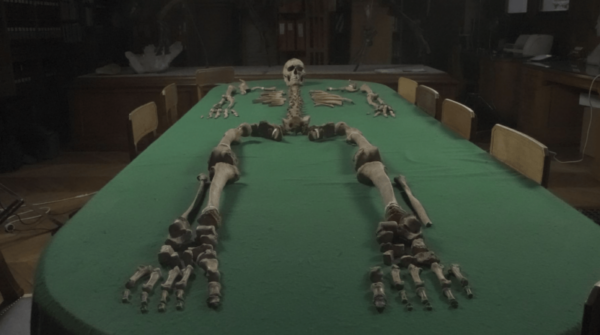
Genomic ancestry and social dynamics of the last hunter-gatherers of Atlantic France
A new article on exogamic practices of hunter-gatherers, by Simões et al. (2024) was published in PNAS, Anthropology. Significance Since the early Holocene, western and central Europe was inhabited by a genetically distinct group of hunter-gatherers. We generated different types of biomolecular data, including deep coverage complete genome sequencing, from human skeletal remains buried in…
-
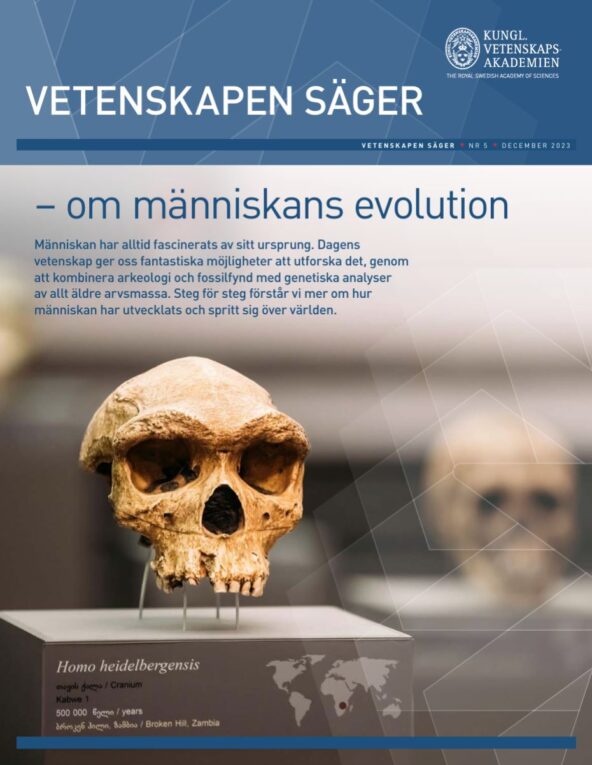
Explaining human evolution: Ny populärvetenskaplig skrift berättar om människans evolution (Swedish)
Science says – about human evolution is the fifth in a series of popular science writings from the Royal Swedish Academy of Sciences, produced and distributed with the support of the Nature & Culture Foundation. The goal is to spread science-based information on important and current topics to the public, especially those where research has…
-
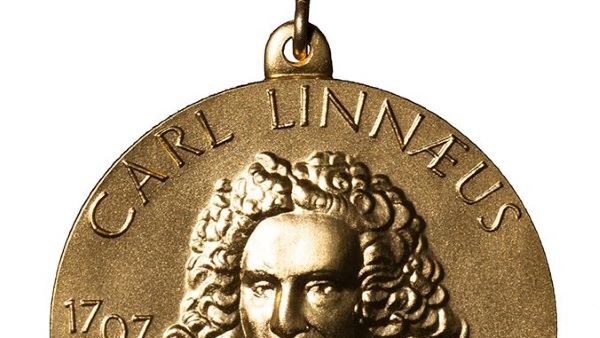
Uppsala University’s 2023 Linnaeus Medal awarded to Mattias Jakobsson
Uppsala University’s Linnaeus Medal was first awarded on 23 May 2007 in connection with the 300th anniversary of the birth of Carl Linnaeus. The gold medal is conferred “for, in particular, truly outstanding scientific achievement, especially in the Linnaean subject areas or fields related to the legacy of Linnaeus”. Mattias Jakobsson is being honoured for…