
Tag: genetics
-
Nobel Symposium 2025 “Palaeogenomics: charting the future of ancient DNA”
WHERE: Villa Aske (Bro) & StockholmWHEN: 26-30 May 2025 Organizers: Centre for Palaeogenetics, SciLifeLab Ancient DNA unit, Uppsala University Human Evolution research program In this symposium we are bring together leading experts in the field of palaeogenomics (15 invited speakers) and early career researchers (ECRs) from Sweden (Stockholm and Uppsala) to engage in discussions and share insights…
-
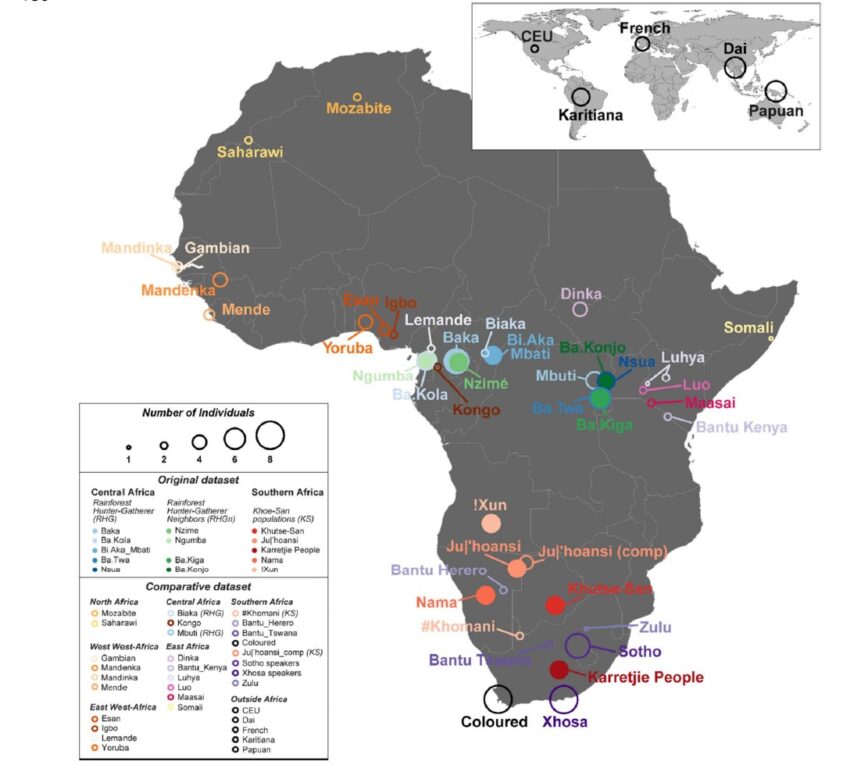
Ancient tree-topologies and gene-flow processes among human lineages in Africa—a new article in prepress
Gwenna, Per, Carina and Mattias are the co-authors of a new paper (prepress now) on Africa. Abstract The deep history of human evolution in Africa remains intensely debated with increasingly complex models being proposed. To investigate human evolutionary history in Africa, we sequenced and investigated 73 novel high-quality whole genomes from 14 Central and Southern…
-
The genetic changes that shaped Neandertals, Denisovans, and modern humans
New paper in Cell: Zeberg, H., Jakobsson, M., & Pääbo, S. (2024). The genetic changes that shaped Neandertals, Denisovans, and modern humans. Cell, 187(5), 1047-1058. https://doi.org/10.1016/j.cell.2023.12.029 Modern human ancestors diverged from the ancestors of Neandertals and Denisovans about 600,000 years ago. Until about 40,000 years ago, these three groups existed in parallel, occasionally met, and exchanged genes.…
-
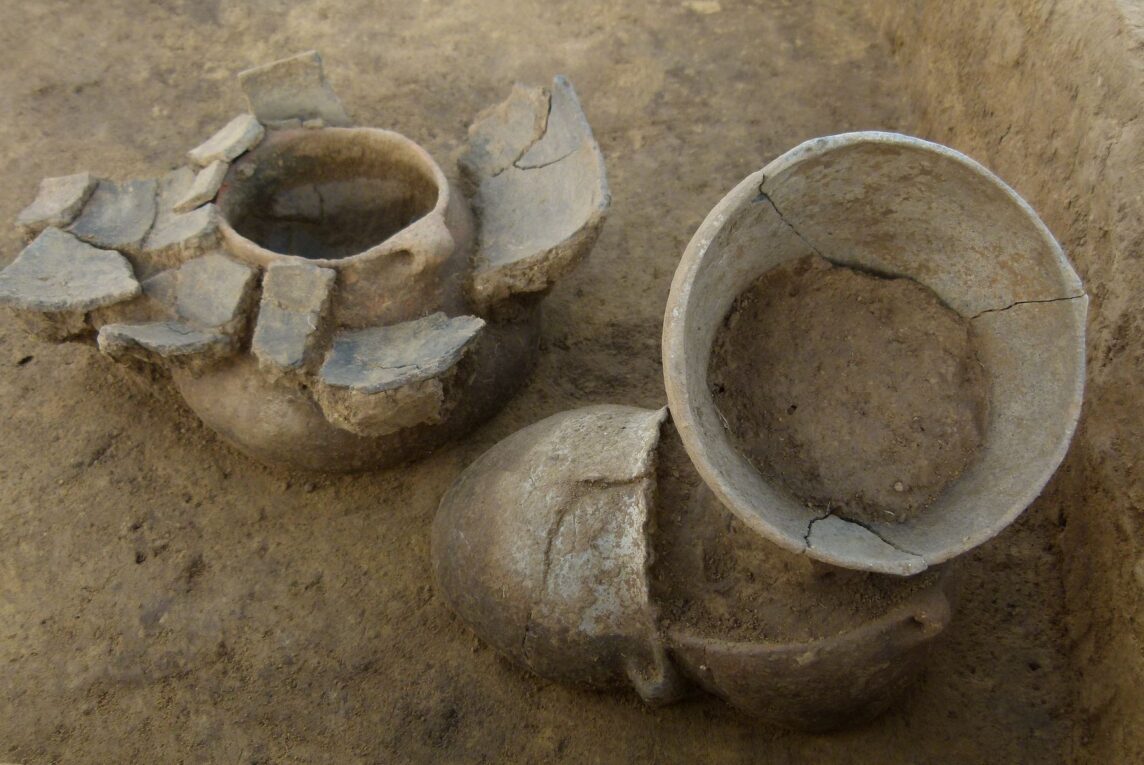
Genetic continuity, isolation, and gene flow in Stone Age Central and Eastern Europe
A new paper by Tiina Mattila and others (2023) is published in Nature, Communications Biology Abstract The genomic landscape of Stone Age Europe was shaped by multiple migratory waves and population replacements, but different regions do not all show similar patterns. To refine our understanding of the population dynamics before and after the dawn of…
-
New grant from the Swedish Research Council
Mattias Jakobsson received funds to start a new project, A genetic model for the evolution of H. sapiens, from 1 Jan 2023. The project will run until end of 2025. Congratulations! Project summary Genetic variation forms the basic material that allows evolutionary change over time. Finding, describing and utilizing genetic variation to understand human evolutionary…
-
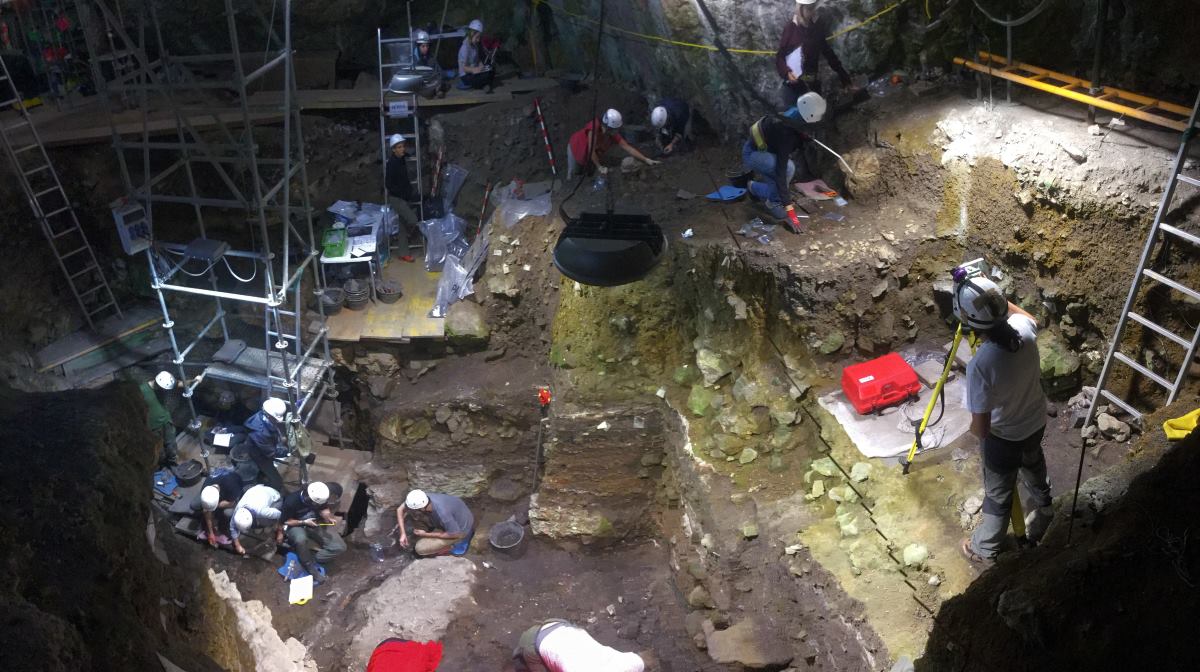
Four millennia of Iberian biomolecular prehistory illustrate the impact of prehistoric migrations at the far end of Eurasia
The team was involved in a multidisciplinary study highlighting the temporal genetic changes caused by prehistoric migrations into Iberia. The analyses of ancient human remains shed light into the origin of farming life-style in the far west of Eurasia. The study is published in PNAS. Significance The gene pool of modern Europeans was shaped through prehistoric…